A Commons for Playखेल का साझा आँगन

అరుగు · अरुगु

Red Fort, New Delhiलाल क़िला, नई दिल्ली
4 December 2026 – 21 March 20274 दिसंबर 2026 – 21 मार्च 2027
The India Biennale ’26द इंडिया बिएनाले ’26

Arugu

About Aruguअरुगु के बारे में

Arugu is a participatory installation that brings people together through the game traditions of the Indian subcontinent. Its name comes from the Telugu arugu (అరుగు), the raised platform outside a home where neighbours and passersby sit, talk and spend time. Like the aangan, it is a place to gather, to linger and to play.

अरुगु एक सहभागी कला-स्थापना है, जो भारतीय उपमहाद्वीप की खेल-परंपराओं के ज़रिए लोगों को एक साथ लाती है। इसका नाम तेलुगु शब्द अरुगु (అరుగు) से आया है। यह घर के बाहर बना ऊँचा चबूतरा होता है, जहाँ पड़ोसी और राहगीर बैठते हैं, बातें करते हैं और समय बिताते हैं। आँगन की तरह, यह भी मिलने-जुलने, कुछ देर ठहरने और खेलने की जगह है।

Responding to The India Biennale's theme, Tat Tvam Asi, Arugu considers how play lets us recognise something of ourselves in another. In an age of distraction, it remains one of the simplest ways to be present with one another: across a board, we learn a person's way of thinking, respond to it, teach and are taught in return.

द इंडिया बिएनाले की थीम ‘तत् त्वम् असि’ से जुड़ते हुए, अरुगु यह सोचता है कि खेल किस तरह हमें दूसरे व्यक्ति में अपना कुछ अंश पहचानने का अवसर देता है। भटकाव के इस दौर में, खेल एक-दूसरे के साथ पूरी तरह उपस्थित रहने के सबसे सरल तरीकों में से एक है: बिसात के आर-पार हम किसी के सोचने का ढंग समझते हैं, उस पर प्रतिक्रिया देते हैं, सिखाते हैं और बदले में सीखते हैं।

Stone slabs found still in use, worn smooth by generations of players, are brought here to be played on again. Alongside them are boards in wood, cloth and stone, courtyard games in new designs by the studio, and works by contemporary artists.

आज भी इस्तेमाल की जा रही पत्थर की पट्टिकाएँ, जो खिलाड़ियों की पीढ़ियों के हाथों से घिसकर चिकनी हो गई हैं, यहाँ फिर से खेलने के लिए लाई गई हैं। इनके साथ लकड़ी, कपड़े और पत्थर की बिसातें, स्टूडियो द्वारा नए रूप में तैयार किए गए आँगन के खेल और समकालीन कलाकारों की कृतियाँ भी हैं।

Studio Arthauz, Visakhapatnam

स्टूडियो आर्टहाउज़, विशाखापत्तनम
Creditsश्रेय

Concept, curation and creative directionसंकल्पना, क्यूरेशन और रचनात्मक निर्देशन
Keerthi Durugaddaकीर्ति दुरुगड्डा
Artists and makersकलाकार और निर्माता
Gopinath Sगोपीनाथ एस
Silakriti Creativesसिलाकृति क्रिएटिव्स
Sagarika Potluriसागरिका पोतलूरी
Teja Gutamतेजा गुटम

With thanks to everyone who helped make Arugu: our collaborators, makers, facilitators and the Studio Arthauz team.

अरुगु को साकार करने में मदद करने वाले सभी लोगों का आभार: हमारे सहयोगियों, कारीगरों, खेल-सहायकों और स्टूडियो आर्टहाउज़ की टीम का।

Game 1 of 7

खेल 1 / 7

Pallankuzhiपल्लांगुझी

Also called: Vamana Guntaluअन्य नाम: वामन गुंटलु

A count-and-capture game of South India, once played on pits carved into rock.

दक्षिण भारत का गिनती और पकड़ का खेल, जो कभी चट्टानों में खुदे गड्ढों पर खेला जाता था।

2 players · 6+

2 खिलाड़ी · 6+ उम्र

Gopinath S, in the studioगोपीनाथ एस, स्टूडियो में

How to playकैसे खेलें

Set upतैयारी

5 seeds in every pit. The row nearest you is yours.

हर गड्ढे में 5 बीज। आपके सबसे पास वाली पंक्ति आपकी है।

  1. 01

    Scoop all the seeds from one of your pits.

    अपने किसी एक गड्ढे के सारे बीज उठाइए।

  2. 02

    Drop one into each pit to your right, on round the board.

    दाईं ओर हर गड्ढे में एक-एक बीज डालते जाइए, बिसात के चारों ओर।

  3. 03

    Hand empty? Scoop the next pit and carry on.

    हाथ ख़ाली? अगले गड्ढे के बीज उठाइए और चलते रहिए।

  4. 04

    Next pit empty? Take the seeds just beyond it. Your turn ends.

    अगला गड्ढा ख़ाली? उसके ठीक आगे वाले गड्ढे के बीज ले लीजिए। आपकी बारी ख़त्म।

  5. 05

    Any pit that reaches four goes to the player on whose side it lies.

    जिस गड्ढे में चार बीज हो जाएँ, वे उस खिलाड़ी के हो जाते हैं जिसकी तरफ़ वह गड्ढा है।

To winजीत

When one side runs dry, count. Most seeds wins.

जब किसी एक तरफ़ के गड्ढे ख़ाली हो जाएँ, बीज गिनिए। सबसे ज़्यादा बीज वाला जीतता है।

At Aruguअरुगु में

Gopinath S

गोपीनाथ एस

b. 1970; lives and works in Bengaluru

जन्म 1970; निवास एवं कार्यक्षेत्र: बेंगलुरु

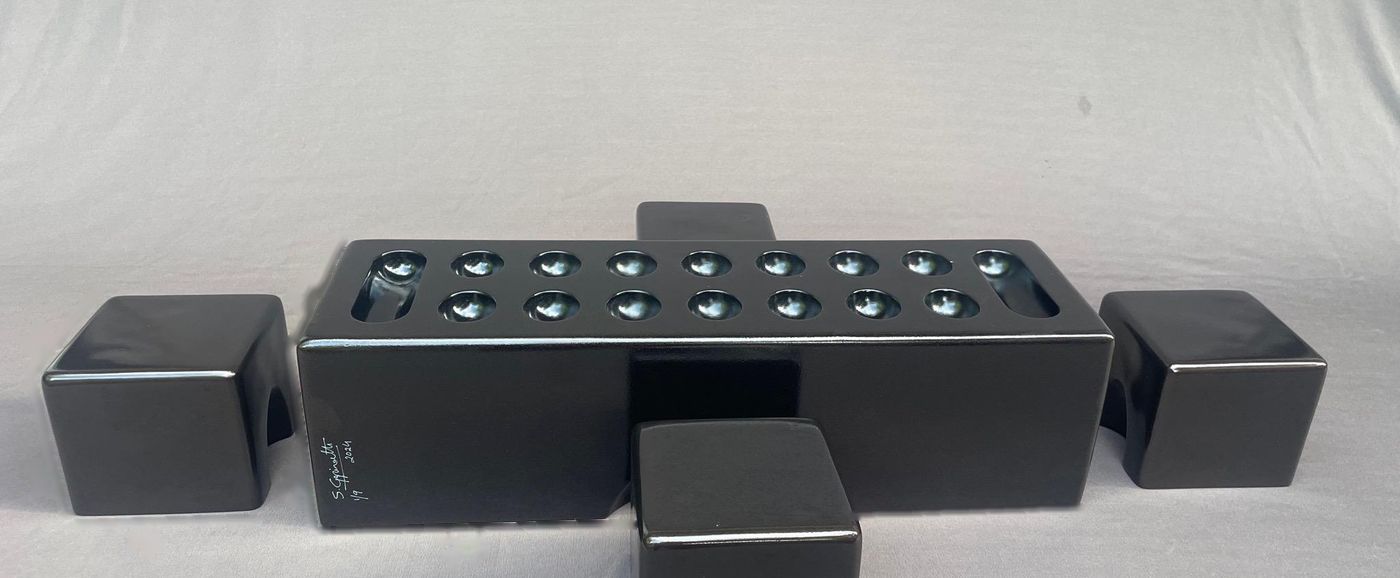
Stones of Memory: The Echoes of Channemane, 2026

स्मृति के पत्थर: चन्नेमणे की गूँज, 2026

Black granite · 196 × 61 × 51 cm

काला ग्रेनाइट · 196 × 61 × 51 सेमी

Channemane was once played across South India on depressions carved into rock, with seeds, beads or pebbles as pieces. As it slipped from everyday life into memory, Gopinath S re-imagined the game as a large stone sculpture: a tribute to the simplicity of the past, made to be played by the generations to come.

चन्नेमणे कभी पूरे दक्षिण भारत में चट्टानों में तराशे गए गड्ढों पर खेला जाता था। बीज, मनके या कंकड़ इसकी गोटियों के रूप में इस्तेमाल होते थे। जब यह खेल रोज़मर्रा की ज़िंदगी से दूर होकर स्मृतियों का हिस्सा बन गया, तब गोपीनाथ एस ने इसे पत्थर के एक बड़े शिल्प के रूप में नए सिरे से रचा: यह बीते समय की सादगी को श्रद्धांजलि है और आने वाली पीढ़ियों के खेलने के लिए बनाया गया है।

Game 2 of 7

खेल 2 / 7

Ashtachammaअष्टाचम्मा

Also called: Thaayamअन्य नाम: तायम

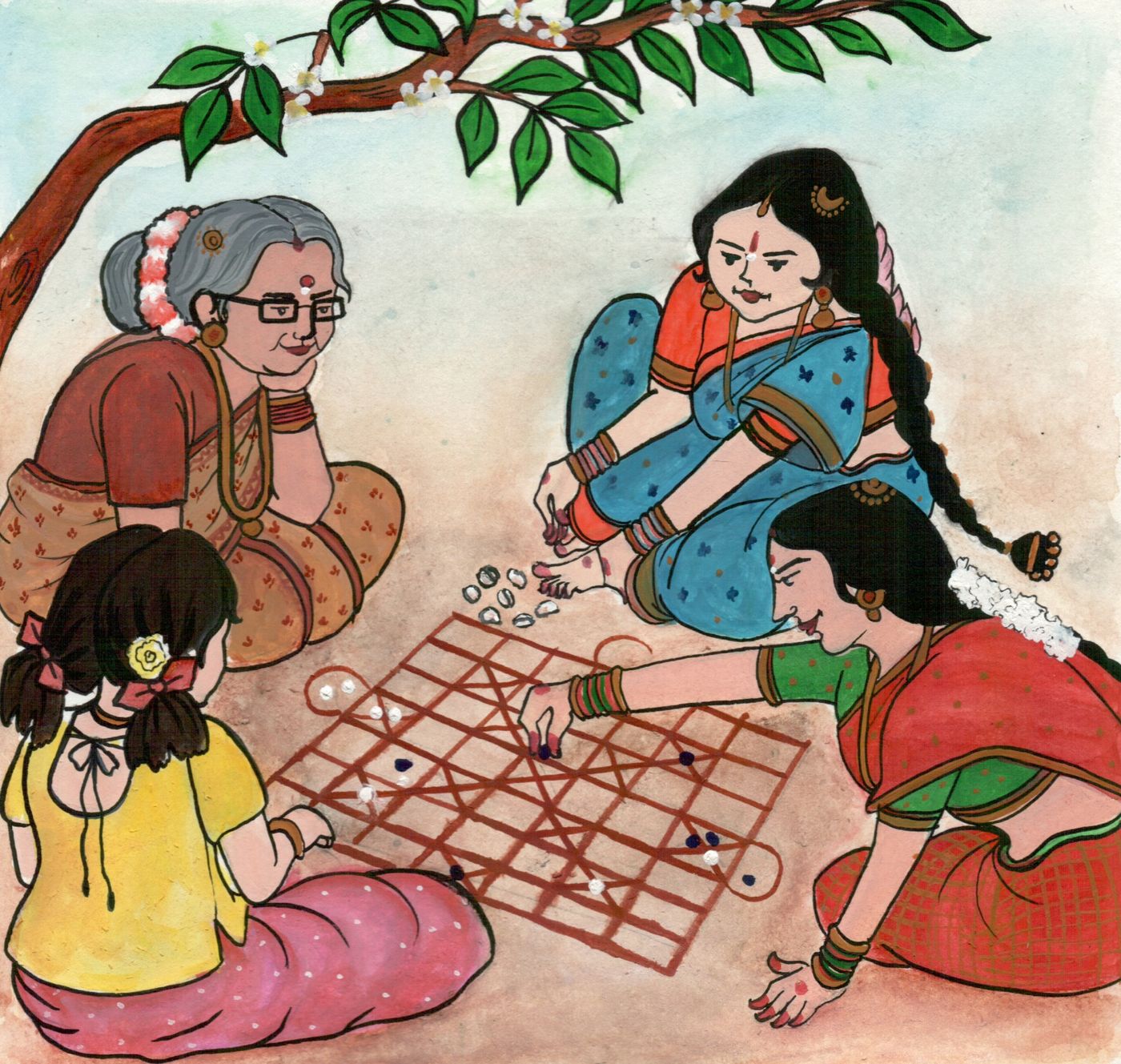
One family of race games, played on a square or a cross, with cowries or dice. Ludo is its youngest member.

दौड़ वाले खेलों का एक परिवार, जो चौकोर या क्रॉस के आकार की बिसात पर कौड़ियों या पासों से खेला जाता है। लूडो इसका सबसे नया सदस्य है।

2–4 players · 6+

2–4 खिलाड़ी · 6+ उम्र

Illustration: Sagarika Potluri for Studio Arthauz, 2026चित्र: सागरिका पोतलूरी, स्टूडियो आर्टहाउज़ के लिए, 2026

How to playकैसे खेलें

Set upतैयारी

4 counters each. Enter at the X on your side.

हर खिलाड़ी की 4 गोटियाँ। अपनी तरफ़ के X से शुरू कीजिए।

  1. 01

    Throw 4 cowries and count those that land mouth up: 1 to 3 moves that many, all four is 4, none is 8.

    4 कौड़ियाँ फेंकिए और गिनिए कि कितनी मुँह ऊपर गिरीं: 1 से 3 हों तो उतने घर चलिए, चारों हों तो 4, एक भी नहीं तो 8।

  2. 02

    A 4 or an 8 throws again.

    4 या 8 आने पर फिर से फेंकिए।

  3. 03

    Race anticlockwise round the outside.

    बाहर वाले घरों में घड़ी की उलटी दिशा में दौड़िए।

  4. 04

    Land on a rival to send them home, unless they rest on an X.

    विरोधी की गोटी पर पहुँचें तो उसे वापस घर भेज दीजिए, जब तक वह X पर न हो।

  5. 05

    After your first capture, turn in and spiral to the centre.

    पहली बार गोटी काटने के बाद अंदर मुड़िए और घूमते हुए बीच तक पहुँचिए।

To winजीत

All four counters home first.

जिसकी चारों गोटियाँ सबसे पहले बीच में पहुँचें, वह जीतता है।

At Ellora, Shiva and Parvati are carved in stone over a game of chaupar.

एलोरा में शिव और पार्वती को पत्थर पर चौपड़ खेलते हुए उकेरा गया है।

At Aruguअरुगु में

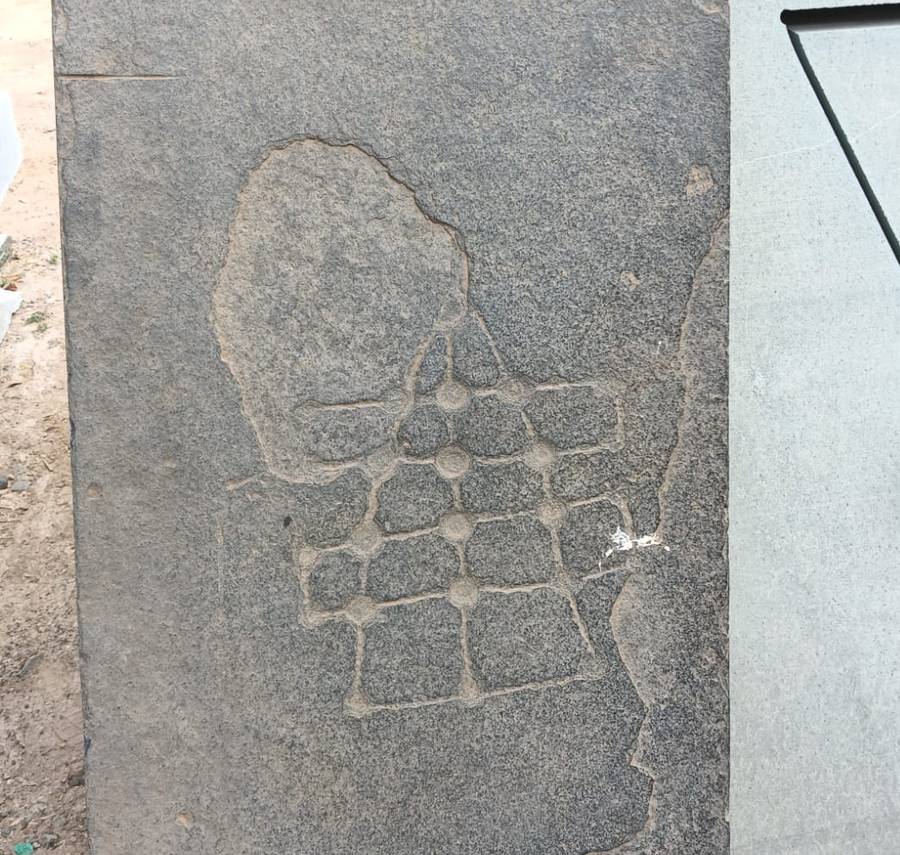
Boards like this are scratched into temple floors, steps and village platforms across South India. This one was found still in use near Allagadda, worn smooth by generations of players. Here, it is played again.

ऐसी बिसातें पूरे दक्षिण भारत में मंदिरों के फ़र्श, सीढ़ियों और गाँव के चबूतरों पर उकेरी मिलती हैं। यह बिसात आल्लगड्डा के पास आज भी उपयोग में मिली, खिलाड़ियों की पीढ़ियों के हाथों घिसकर चिकनी। यहाँ यह फिर से खेली जाती है।

Sagarika Potluri for Studio Arthauz

सागरिका पोतलूरी, स्टूडियो आर्टहाउज़ के लिए

Ashtachamma board, 2026

अष्टाचम्मा बिसात, 2026

Embroidery on fabric · 46 × 46 cm

कपड़े पर कढ़ाई · 46 × 46 सेमी

Many hands, over many years

अनेक हाथ, अनेक बरस

Ashtachamma board, found in use

अष्टाचम्मा बिसात, उपयोग में मिली

Stone, from near Allagadda, Andhra Pradesh · 43 × 38 × 5 cm

पत्थर, आल्लगड्डा (आंध्र प्रदेश) के पास से · 43 × 38 × 5 सेमी

Game 3 of 7

खेल 3 / 7

Bagh Chal · Puli Mekaबाघ-चाल · पुली मेका

Also called: Aadu Puli Aattamअन्य नाम: आडु पुली आट्टम

A few tigers against a herd of goats, scratched into stone across South Asia.

कुछ बाघ और बकरियों का एक झुंड: यह खेल पूरे दक्षिण एशिया में पत्थरों पर उकेरा मिलता है।

2 players · 7+

2 खिलाड़ी · 7+ उम्र

Found in use near Allagaddaआल्लगड्डा के पास उपयोग में मिली

How to playकैसे खेलें

Set upतैयारी

Triangle board: 3 tigers, 15 goats; one tiger starts at the top, the other two join on the tiger's next turns. Square board: 2 tigers on two corners, 6 goats. Goats start off the board.

त्रिकोण बिसात: 3 बाघ, 15 बकरियाँ; एक बाघ सबसे ऊपर से शुरू करता है, बाक़ी दो बाघ की अगली दो चालों में आते हैं। चौकोर बिसात: दो कोनों पर 2 बाघ, 6 बकरियाँ। बकरियाँ बिसात के बाहर से शुरू करती हैं।

  1. 01

    Goats first: place one goat on any empty point.

    पहले बकरी: किसी भी ख़ाली बिंदु पर एक बकरी रखिए।

  2. 02

    Tigers step one point along a line, or jump a goat to capture it.

    बाघ रेखा पर एक बिंदु आगे बढ़ता है, या बकरी के ऊपर से कूदकर उसे पकड़ लेता है।

  3. 03

    Once every goat is down, goats step too. Goats never jump.

    सारी बकरियाँ रखी जा चुकें, तो बकरियाँ भी चलती हैं। बकरियाँ कभी नहीं कूदतीं।

To winजीत

Tigers take 5 goats (3 on the square board); goats trap every tiger.

बाघ 5 बकरियाँ पकड़ लें (चौकोर बिसात पर 3) तो बाघ जीतते हैं; बकरियाँ हर बाघ को घेर लें तो बकरियाँ जीतती हैं।

At Aruguअरुगु में

Boards like this are scratched into temple floors, steps and village platforms across South India. These were found still in use near Allagadda, worn smooth by generations of players. Here, they are played again.

ऐसी बिसातें पूरे दक्षिण भारत में मंदिरों के फ़र्श, सीढ़ियों और गाँव के चबूतरों पर उकेरी मिलती हैं। ये बिसातें आल्लगड्डा के पास आज भी उपयोग में मिलीं, खिलाड़ियों की पीढ़ियों के हाथों घिसकर चिकनी। यहाँ ये फिर से खेली जाती हैं।

Sagarika Potluri for Studio Arthauz

सागरिका पोतलूरी, स्टूडियो आर्टहाउज़ के लिए

Puli Meka board, 2026

पुली मेका बिसात, 2026

Embroidery on fabric · 46 × 46 cm

कपड़े पर कढ़ाई · 46 × 46 सेमी

Many hands, over many years

अनेक हाथ, अनेक बरस

Puli Meka board, found in use

पुली मेका बिसात, उपयोग में मिली

Stone, from near Allagadda, Andhra Pradesh · 38 × 36 × 5 cm

पत्थर, आल्लगड्डा (आंध्र प्रदेश) के पास से · 38 × 36 × 5 सेमी

Many hands, over many years

अनेक हाथ, अनेक बरस

Puli Meka board, found in use

पुली मेका बिसात, उपयोग में मिली

Stone, from near Allagadda, Andhra Pradesh · 38 × 33 × 5 cm

पत्थर, आल्लगड्डा (आंध्र प्रदेश) के पास से · 38 × 33 × 5 सेमी

Many hands, over many years

अनेक हाथ, अनेक बरस

Bagh Chal board, found in use

बाघ-चाल बिसात, उपयोग में मिली

Stone, from near Allagadda, Andhra Pradesh · 28 × 25 × 5 cm

पत्थर, आल्लगड्डा (आंध्र प्रदेश) के पास से · 28 × 25 × 5 सेमी

Game 4 of 7

खेल 4 / 7

Gyan Chauparज्ञान चौपड़

Also called: Paramapadamअन्य नाम: परमपदम

The game of knowledge: each row a stage in the soul's passage through many births.

ज्ञान का खेल: हर पंक्ति अनेक जन्मों से गुज़रती आत्मा की यात्रा का एक पड़ाव है।

Anyone · one throw each

कोई भी · हर किसी की एक बारी

How to playकैसे खेलें

  1. 01

    Throw the dice once.

    एक बार पासा फेंकिए।

  2. 02

    Walk to the square it shows.

    जो अंक आए, उस खाने तक चलिए।

  3. 03

    Read its word and its question, and answer.

    उस खाने का शब्द और सवाल पढ़िए, और जवाब दीजिए।

  4. 04

    Your answer may lift you up a ladder or send you down a snake.

    आपका जवाब आपको सीढ़ी पर चढ़ा सकता है या साँप से नीचे भेज सकता है।

  5. 05

    Step off, and pass the dice on.

    बिसात से उतरिए और पासा अगले को दीजिए।

There is no winning here. The journey goes round again.

यहाँ कोई जीतता नहीं। यात्रा फिर से शुरू होती है।

Taken to England in the nineteenth century, it became Snakes and Ladders.

उन्नीसवीं सदी में इंग्लैंड पहुँचकर यही खेल स्नेक्स एंड लैडर्स बना।

At Aruguअरुगु में

Sagarika Potluri and Teja Gutam for Studio Arthauz

सागरिका पोतलूरी और तेजा गुटम, स्टूडियो आर्टहाउज़ के लिए

Gyan Chaupar, 2026

ज्ञान चौपड़, 2026

Lino print on fabric · 305 × 244 cm

कपड़े पर लिनो प्रिंट · 305 × 244 सेमी

Game 5 of 7

खेल 5 / 7

Kith Kithकिथ-किथ

Also called: Hopscotchअन्य नाम: हॉपस्कॉच

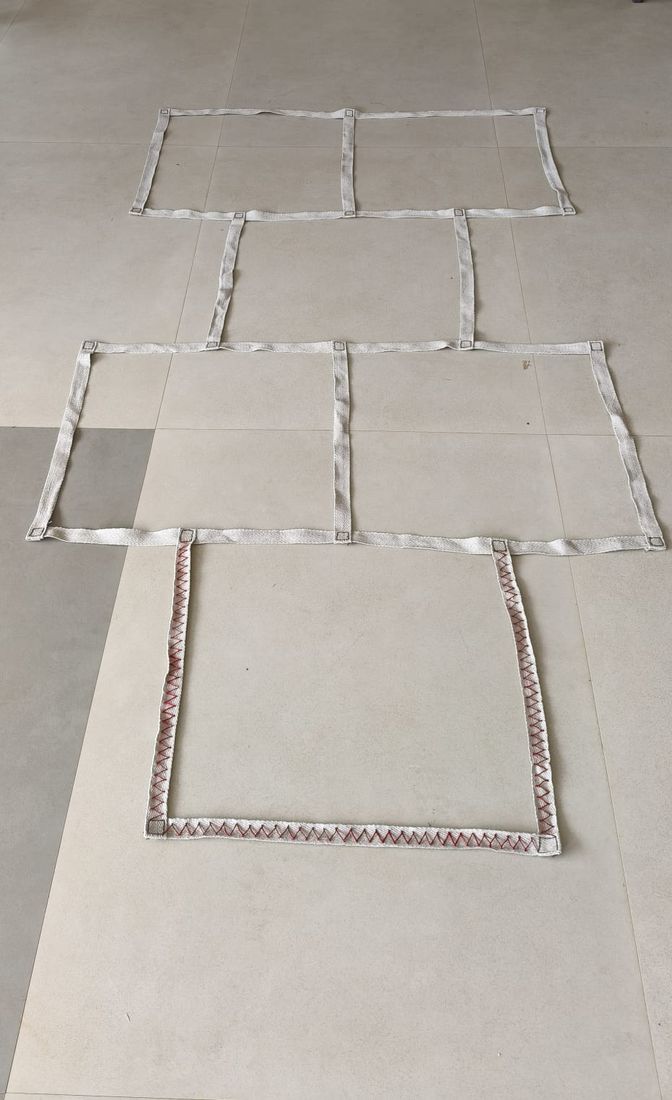
Drawn wherever there is a patch of ground and a flat stone.

जहाँ भी थोड़ी ज़मीन और एक चपटा पत्थर मिल जाए, वहीं इसका खाका खिंच जाता है।

1 or more, one at a time · 5+

1 या ज़्यादा, एक-एक करके · 5+ उम्र

In the studio, October 2026स्टूडियो में, अक्टूबर 2026

How to playकैसे खेलें

  1. 01

    Toss your stone into the first box.

    अपना पत्थर पहले खाने में फेंकिए।

  2. 02

    Hop the court, skipping that box: one foot on singles, two on doubles.

    उस खाने को छोड़कर कोर्ट पर कूदिए: अकेले खाने में एक पैर, जोड़े वाले खानों में दोनों पैर।

  3. 03

    Turn, hop back, pick up your stone.

    मुड़िए, कूदते हुए वापस आइए और अपना पत्थर उठाइए।

  4. 04

    Next turn, aim for the next box.

    अगली बारी में अगले खाने का निशाना लगाइए।

  5. 05

    Miss, step on a line or put a hand down, and your turn ends.

    निशाना चूके, रेखा पर पैर पड़ा या हाथ ज़मीन पर टिका, तो आपकी बारी ख़त्म।

To winजीत

First through every box. On the abstract court, invent a route and teach it.

जो सबसे पहले हर खाना पार करे, वह जीतता है। अमूर्त कोर्ट पर अपना रास्ता बनाइए और किसी को सिखाइए।

At Aruguअरुगु में

Teja Gutam for Studio Arthauz

तेजा गुटम, स्टूडियो आर्टहाउज़ के लिए

Kith Kith court: Kolam, 2026

किथ-किथ: कोलम, 2026

Woven fabric tape · 244 × 122 cm

बुनी हुई कपड़े की पट्टी · 244 × 122 सेमी

This court is laid out as a kolam, the pattern drawn at the threshold of South Indian homes each morning.

यह कोर्ट कोलम के रूप में बना है: वह आकृति जो दक्षिण भारत में हर सुबह घर की देहरी पर बनाई जाती है।

Teja Gutam for Studio Arthauz

तेजा गुटम, स्टूडियो आर्टहाउज़ के लिए

Kith Kith court: Abstract, 2026

किथ-किथ: अमूर्त, 2026

Mixed media · 244 × 244 cm

मिश्रित माध्यम · 244 × 244 सेमी

This court has no set route: invent one, and teach it to the next player.

इस कोर्ट में कोई तय रास्ता नहीं है: अपना रास्ता बनाइए और अगले खिलाड़ी को सिखाइए।

Game 6 of 7

खेल 6 / 7

Kancheकंचे

Also called: Golilataअन्य नाम: गोलीलाटा

Played in every lane, with pebbles and seeds long before glass.

हर गली में खेला जाने वाला खेल, जो काँच की गोलियों से बहुत पहले कंकड़ों और बीजों से खेला जाता था।

2–6 players · 6+, not for under-3s

2–6 खिलाड़ी · 6+ उम्र · 3 साल से छोटे बच्चों के लिए नहीं

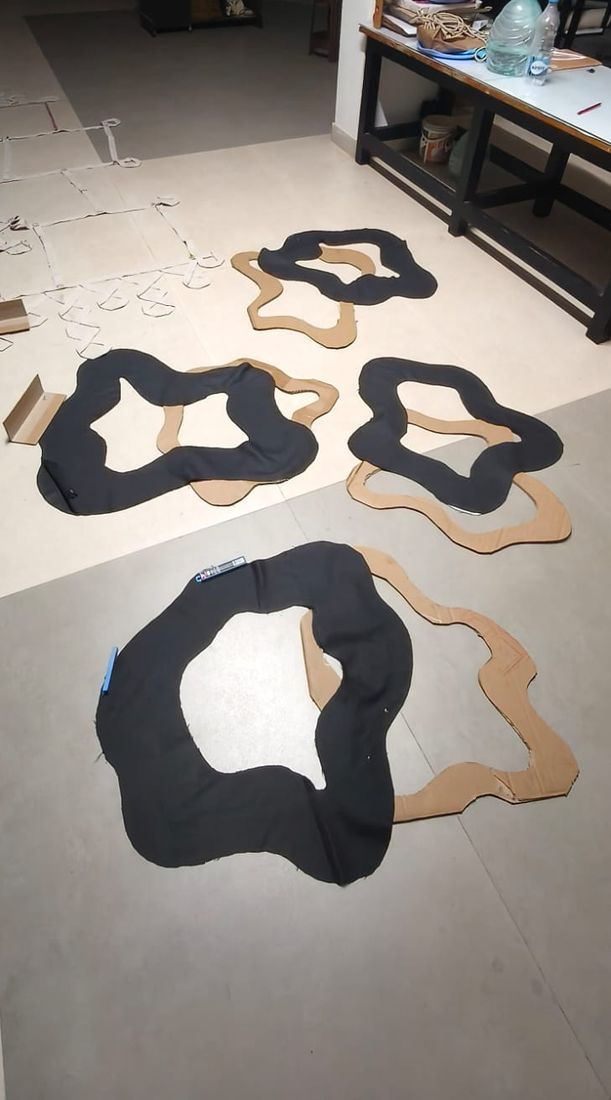
In the studio, October 2026स्टूडियो में, अक्टूबर 2026

How to playकैसे खेलें

Set upतैयारी

A marble on each marked point of the ring.

घेरे के हर निशान पर एक कंचा रखिए।

  1. 01

    Kneel at the edge.

    घेरे के किनारे घुटनों के बल बैठिए।

  2. 02

    Flick your shooter.

    अपना निशाने वाला कंचा उँगली से छिटकाइए।

  3. 03

    Knock marbles off their points and out of the ring. Count each one you knock out.

    कंचों को उनके निशान से हटाकर घेरे से बाहर कीजिए। हर बाहर किया कंचा गिनिए।

  4. 04

    Shooter still in the ring? Shoot again from there.

    आपका कंचा अब भी घेरे के अंदर है? वहीं से फिर चलाइए।

To winजीत

Whoever knocked out the most marbles when the ring is clear. Every marble goes back in the bowl.

घेरा ख़ाली होने पर जिसने सबसे ज़्यादा कंचे बाहर किए, वह जीतता है। हर कंचा वापस कटोरे में रखिए।

At Aruguअरुगु में

Teja Gutam for Studio Arthauz

तेजा गुटम, स्टूडियो आर्टहाउज़ के लिए

Kanche ring: Kalamkari, 2026

कंचे का घेरा: कलमकारी, 2026

Mixed media · Ø 91 cm

मिश्रित माध्यम · व्यास 91 सेमी

The ring borrows from kalamkari, the hand-painted cloth of Andhra Pradesh: a swan, turtle, conch, fish and snake circle it.

यह घेरा आंध्र प्रदेश के हाथ से रंगे कपड़े, कलमकारी, से प्रेरित है: इसके चारों ओर हंस, कछुआ, शंख, मछली और साँप हैं।

Teja Gutam for Studio Arthauz

तेजा गुटम, स्टूडियो आर्टहाउज़ के लिए

Kanche ring: Floral kolam, 2026

कंचे का घेरा: फूलों का कोलम, 2026

Mixed media · Ø 91 cm

मिश्रित माध्यम · व्यास 91 सेमी

The ring is drawn as a floral kolam, the pattern drawn at the threshold of South Indian homes each morning.

यह घेरा फूलों वाले कोलम के रूप में बना है: वह आकृति जो दक्षिण भारत में हर सुबह घर की देहरी पर बनाई जाती है।

Game 7 of 7

खेल 7 / 7

Bongaramबोंगरम

Also called: Lattuअन्य नाम: लट्टू

Lacquered wooden tops from Etikoppaka, near Visakhapatnam.

विशाखापत्तनम के पास एटिकोप्पाका के लाख चढ़े लकड़ी के लट्टू।

Anyone

कोई भी

How to playकैसे खेलें

Playखेल

A few tops wait on the table. Pick one, give it a good twist and watch it dance. Spin together and see whose lasts longest, then leave them on the trays for whoever comes next.

मेज़ पर कुछ लट्टू रखे हैं। एक उठाइए, ज़ोर से घुमाइए और उसे नाचते देखिए। साथ में घुमाइए और देखिए किसका लट्टू सबसे देर तक नाचता है, फिर उन्हें अगले आने वालों के लिए ट्रे में रख दीजिए।

Etikoppaka, near Visakhapatnam, has made lacquered wooden toys and tops for generations.

विशाखापत्तनम के पास एटिकोप्पाका में पीढ़ियों से लाख चढ़े लकड़ी के खिलौने और लट्टू बनते आए हैं।

At Aruguअरुगु में

Silakriti Creatives

सिलाकृति क्रिएटिव्स

Bongaram table, 2026

बोंगरम मेज़, 2026

Stone · H 91 cm, Ø 137 cm · tops from Etikoppaka

पत्थर · ऊँचाई 91 सेमी, व्यास 137 सेमी · लट्टू एटिकोप्पाका से

In augmented reality

ऑगमेंटेड रियलिटी में

Four worksचार कृतियाँ

Four works, at full size, in AR. Open one, point your phone at the ground and set it down on the lawn.

चार कृतियाँ, पूरे आकार में, AR में। किसी एक को खोलिए, फ़ोन ज़मीन की ओर कीजिए और उसे लॉन पर रख दीजिए।